iips to Keep Your Pet Calm, Happy & Healthy
After you’ve noticed the
symptoms of anxiety in your dog and had a veterinarian perform a
physical to rule out medical causes, there are a few simple, effective steps that you can take to reduce or even eliminate the anxiety—which will be beneficial to both you and your dog in the long run.
There are a number of good options for treating anxiety in dogs, and the method that you choose, or that your vet recommends, will depend on the breed, age, and health of your dog as well as whether the anxiety is generalized or a response to a specific trigger. All of these factors can influence your dog’s level of anxiety and how well your dog will respond to various treatments.
Common Causes of Fear and Anxiety in Dogs
Dogs become fearful for a wide variety of reasons, but most dogs respond in fear to a specific stimulus, such as fireworks, water, or other dogs. The best way to approach situations like these is to remove the trigger, when possible, and wait it out or administer anti-anxiety medication. Pinpointing the cause of generalized anxiety is more difficult. Here are a few of the most common causes for anxiety in dogs:
Illness & Pain.
Dogs who are sick, weak, or who have a painful physical condition such as arthritis often temporarily experience increased anxiety, which makes them snap, snarl, or act self-protective. Prolonged sickness or weakness can cause the development of more chronic, generalized phobias and anxieties.
Separation Anxiety.
Separation anxiety is the most common form of an anxious response to a specific stimulus. Dogs who are experiencing separation anxiety typically engage in destructive behaviors. Separation anxiety can be caused by abandonment, neglect, or rehoming. Also, please don’t forget that separation anxiety is also often a breed related, or genetic issue, seen more commonly in herding breeds or working dogs (we’re looking at you German Shepherd). We counsel our clients to take life-style factors into consideration when selecting a new furry-family member.
Aging.
If you are caring for an elderly dog, you may have noticed some behavioral changes. As dogs age, they are more likely to develop old-age-onset separation anxiety as well as other phobias and generalized anxieties. Many older dogs become more fearful or anxious at night, whimpering or self-soothing through excessive paw licking. Most of these behaviors are linked to changes to the nervous system, loss of hearing and sight, and the natural decline in cognitive function, learning, and memory as a result of aging.
Past Experiences.
Dogs who exhibit phobias and panic could have a history of being unable to escape from a fearful situation, such as being locked in a crate during a thunderstorm or being chained up and abused. Not all anxiety is caused by abuse, neglect, or other unfamiliar and frightening experiences. However, if you’ve adopted a rescue dog, it’s important to remember that your dog has past experiences that you aren’t aware of.
Improper Socialization.
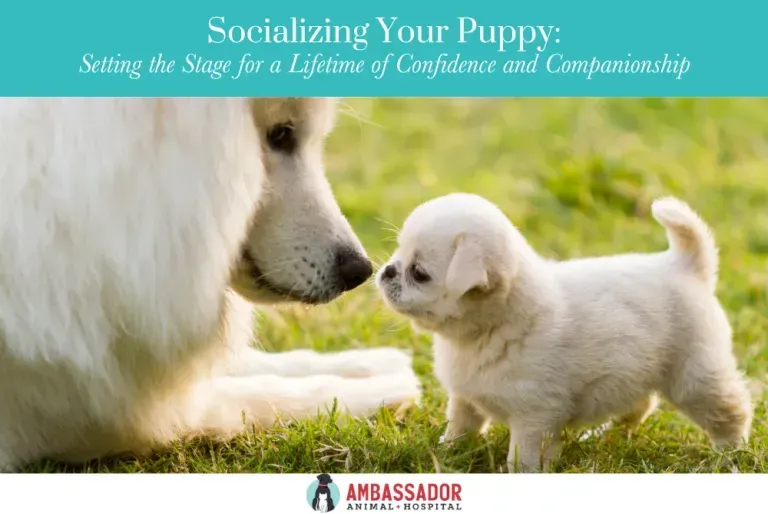
Dogs who have been deprived of the necessary social and environmental stimuli as puppies may develop habitual fearfulness and anxiety. Socialization and behavior modification are the best ways to deal with dogs who were never socialized at a young age.
Helping Your Dog Cope with Anxiety
Whether or not you are able to figure out the exact cause of your dog’s anxiety, there are ways that you can help your dog cope. Making the effort to deal with doggy anxiety will not only protect your dog’s health, it will also save you the frustration of chewed up furniture, stained carpets, and nights of poor sleep.
Medicine.
Anti-anxiety medications are gentle, safe, effective, and inexpensive. At Ambassador, we usually recommend prescription medication for dogs who are exhibiting severe symptoms such as destructive or self-harming behavior or for dogs who are fearful of specific triggers, such as car rides or thunderstorms. In these cases, it’s better to administer a calming medicine than to risk injury or illness due to a stressed immune system. Why should your dog have to experience these fearful events? We are able to fill anti-anxiety prescriptions while you wait at our in-house pharmacy.
Behavior Modification.
Behavior modification, also known as dog training, is an excellent choice for dogs who have generalized anxiety and other behavioral problems, especially rescue dogs who have an unknown history. Plus, behavior modification tends to be the most effective, long-term solution. Natural fear responses, such as the fight or flight response, are healthy and should not be trained out of your dog—but unnatural, strange, or out-of-context responses are learned behaviors that can be unlearned through desensitization and counter-conditioning. The best bet is to engage the services of a professional. We offer behavioral counseling for common problems and work with external training experts if a problem is beyond our expertise. Of course, if you have the time, you can also research and work on behavior modification by yourself. If you go this route, remember to be patient, use positive reinforcement, and never punish your dog for a fear or anxiety-related behavior.
Preventing & Reducing Anxiety.
With anxiety, as with most health issues, prevention is better than a cure. Other than purchasing our puppy package, preventing future anxiety is the best thing that you can do to ensure that your newly-adopted fur family member remains healthy and happy for life. In order to decrease the likelihood of fearful and destructive behavior, make sure that you begin socialization early (but after your puppy is properly vaccinated), exposing your new puppy to many different environments and social situations when young. Some examples may include taking your puppy to the dog park, allowing children to hold and play with your puppy while supervised, and allowing a family member or friend to keep your puppy while you are away. The more often you are able to put your new puppy into unfamiliar situations that are safe, the less likely you are to deal with anxiety later in life. Please ask us for specifics on when your puppy has received enough vaccinations to make different types of socialization appropriate and safe.
Exercise.
Certain dogs have been bred to exercise their bodies and their minds—to be companions and workers for people. If your dog isn’t getting enough work and human engagement during the day, it’s very likely that this is the source of anxiety. Try going for a brisk, 15-minute walk as soon as you wake up and again as soon as you get home from work. If this isn’t possible for you, hire a dog-walker a couple of days a week. You’d be surprised how much a little exercise can decrease your dog’s anxiety levels. A robust exercise regimen is especially helpful for dogs who are experiencing separation anxiety, for aging dogs who aren’t as mentally alert as they used to be, and for dogs who have trouble sleeping due to anxiety.
Natural Remedies.
There are so many specialty diets, supplements, treats, and other natural remedies for anxiety on the market, it can be tough to know where to begin. Before starting your dog on any supplement regimen, even if it’s all-natural, be sure to talk to one of our vets first. Though generally safe, you want to ensure that the supplements you choose will work for your breed of dog and won’t interact with any medications your dog may be taking. In general, Rescue Remedy products are a safe, natural blend of herb and flower extracts that have been proven to calm anxious pets. We also often recommend Kong chew toys, or puzzle toys, for dogs who are dealing with separation anxiety and other behavior issues. Stuff one of these with some favorite treats to engage your dog’s brain and fight boredom while you are away.
If your dog seems anxious, schedule an appointment with Ambassador Animal Hospital or talk to us at your next
annual wellness exam. Our experienced staff can help you determine what is most likely to be causing your dog’s anxiety and recommend the best course of action.