Ambassador Animal Hospital | Greenville, SC
Bringing a new puppy home is an exciting and heartwarming experience. From the playful tail wags to the curious nose sniffs, everything is new—for both you and your pup. One of the most important responsibilities you have as a pet owner is socializing your puppy.
Proper socialization during the early stages of development lays the foundation for a well-adjusted, friendly, and confident adult dog.
At
Ambassador Animal Hospital
in
Greenville, SC,
we’re here to help you understand the significance of socialization, how to do it right, and when to start.
Why Puppy Socialization Matters
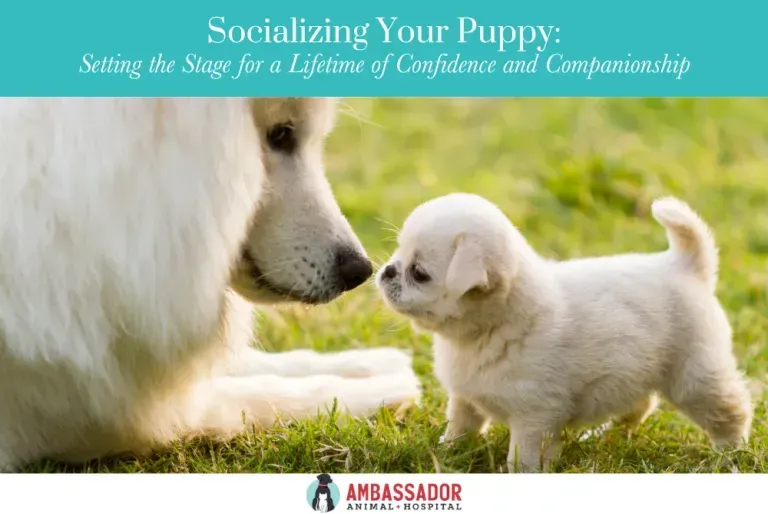
Socialization refers to the process of gently and positively exposing your puppy to a wide variety of experiences, environments, people, and animals. The goal is to help your pup become comfortable and confident in the world around them.
A well-socialized dog is:
- Less likely to react with fear or aggression
- Better with new people and pets
- More adaptable to new environments
- Easier to train and handle in public spaces
- Happier and more secure in unfamiliar situations
Poorly socialized dogs may exhibit anxiety, behavioral problems, and fear-based aggression that can make vet visits, grooming appointments, and daily walks more stressful than enjoyable.
When to Start Socializing Your Puppy
The critical window for socialization is between 8 and 14 weeks of age. During this time, puppies are especially open to new experiences. While it’s important to protect your pup from contagious diseases before they’re fully vaccinated, it’s equally essential to begin socialization in safe, controlled environments.
Your veterinarian at Ambassador Animal Hospital can help guide you through the balance between safe exposure and health protection during this early stage.
How to Socialize Your Puppy: Key Steps
Introduce New People
- Expose your puppy to different people—men, women, children, people in uniforms or hats, etc. Encourage gentle petting and treat-based greetings to build positive associations.
Play with Other Dogs
- Look for opportunities for your puppy to meet other friendly, vaccinated dogs. Puppy classes or one-on-one playdates with known dogs can be helpful.
Explore New Environments
- Take short trips to different locations: a friend’s house, a pet-friendly store, a short walk in your own neighborhood. Let your puppy explore different surfaces like tile, carpet, grass, and gravel. Avoid areas heavily trafficked by dogs such as dog parks.
Expose Them to Everyday Sounds
- Vacuum cleaners, doorbells, traffic, and thunder can all be scary if introduced too late. Play recordings at low volumes or gradually introduce these sounds at home.
Practice Handling
- Gently touch your puppy’s paws, ears, and mouth regularly to prepare them for grooming and vet exams. Offer treats to make it a positive experience.
Enroll in Puppy Classes
- Training classes that emphasize socialization and positive reinforcement can be incredibly helpful. They also offer guidance for behavior and obedience.
Common Socialization Mistakes to Avoid
- Pushing too fast:
If your puppy seems overwhelmed, take a step back. Never force interactions.
- Skipping socialization out of fear of illness:
Consult your vet on how to socialize safely before vaccines are complete.
- Rewarding fearful behavior:
Comforting your puppy when they are scared can unintentionally reinforce fear. Instead, model calm behavior and redirect with treats and toys.
Frequently Asked Questions
Q: Can I socialize my puppy before they’re fully vaccinated?
A:
Yes, but carefully. Avoid dog parks or unknown animals. Focus on safe environments, familiar homes, and controlled puppy classes. Our veterinarians can provide individualized recommendations.
Q: What happens if I miss the socialization window?
A:
It’s never too late to work on socialization, but it may take more time and patience. A professional trainer and behaviorist can help overcome fear-based behaviors in older dogs.
Q: How can I tell if my puppy is feeling anxious during socialization?
A:
Watch for signs like cowering, excessive panting, growling, tail tucking, or attempts to escape. If you notice any of these, remove your pup from the situation and try again more slowly later.
Q: Are puppy classes really necessary?
A:
While not mandatory, structured puppy classes offer great benefits. They provide a safe, supervised environment for socialization and reinforce good behavior from an early age.
Q: How long does socialization last?
A:
While the critical window ends around 14 weeks, socialization should be an ongoing part of your dog’s life, especially through the first year. Continue exposing them to new people, places, and experiences regularly.
Supporting Your Puppy’s Journey at Ambassador Animal Hospital
At
Ambassador Animal Hospital, we understand how vital early development is to a dog’s lifelong behavior and happiness. We’re here to provide not only comprehensive veterinary care but also expert guidance on behavior, training, and socialization. From your puppy’s first exam to their booster shots and beyond, our team is committed to your pet’s total well-being.
Contact Us Today
📍 Ambassador Animal Hospital
620 Wade Hampton Boulevard
Greenville, SC 29609
📞 Phone:
(864) 271-1112
🌐
Visit Our Website
Let us help you raise a confident, joyful, and well-socialized pup. Schedule your puppy’s wellness visit today!